
What is happening with permafrost greenhouse gas releases?
Arctic Centre research professor Bruce Forbes has taken part in an expert assessment, published in Environmental Research Letters on 7 March 2016. The results go to the core of Arctic related climate discussion: what is actually happening with permafrost greenhouse gas releases? Are we talking about a tipping point, a time bomb or what?
Press release
Biomass offsets little or none of permafrost carbon release from soils,
streams, and wildfire: an expert assessment
published in Environmental Research Letters on 7 March 2016
• Tundra and boreal biomass may decrease in response to global warming due to
drought stress, increased fire, and insect damage.
• First circumarctic
projections of carbon export from rivers and coastal erosion (nearly a doubling
by 2100) and of tundra fire (3-fold increase).
• The permafrost zone will
be a net carbon source by 2100 but experts predict 65-85% of carbon release may
still be avoided if human emissions start decreasing before 2050.
The permafrost carbon feedback has been portrayed in popular media and to a
lesser extent in peer-reviewed literature as an all-or-nothing scenario.
Permafrost greenhouse gas release has been described as a tipping point, a
runaway climate feedback, and most dramatically, a time bomb. Though models
predict that some portion of permafrost carbon release will be offset by
increased arctic and boreal biomass, estimates of the permafrost carbon feedback
vary by a factor of thirty. This uncertainty means that permafrost carbon is
currently not considered in climate negotiations, increasing the risk of further
overshooting international emissions targets with serious societal and
environmental consequences.
Because precise empirical or
model-based assessments of the critical factors driving permafrost carbon
balance are unlikely in the near future, we used expert assessment techniques to
collect quantitative judgments from 98 permafrost-region scientists of the
response of high-latitude carbon balance to four warming scenarios. This
approach is complementary to traditional modeling techniques because it allows
consideration of a range of factors known to affect carbon balance but
insufficiently quantified for inclusion in models. For the permafrost region
these effects include nutrient dynamics, non-linear shifts in vegetation, human
disturbance, land-water interactions, and the relationship of permafrost
degradation with water balance.
Results suggest that, contrary to
current model projections, total permafrost-region biomass could decrease due to
water stress and disturbance in the boreal forest. Experts predicted major
shifts in hydrologic carbon flux and wildfire emissions, particularly for carbon
released into the ocean from collapsing coastlines and for tundra fire, which
could increase by 2- and 5-fold, respectively, by the end of the century. In
combination with previous findings, these results suggest the permafrost region
will become a carbon source to the atmosphere by 2100 regardless of warming
scenario. However, because estimates of change in biomass are similar across
warming scenarios but permafrost carbon release is strongly
temperature-sensitive, the emissions gap widens for warmer scenarios, resulting
in five-times more net carbon release under the business as usual scenario
(RCP8.5) than for the active reduction of human emissions scenario (RCP2.6).
This suggests that 65 to 85% of permafrost carbon release can still be avoided
if human emissions are rapidly reduced.
Our study does not support
a runaway climate feedback scenario, but instead indicates that the strength of
the permafrost carbon feedback depends on the amount of human emissions. That
said, based on warming events in the Eocene and the Holocene when permafrost was
completely or partially degraded, there could be a tipping point between 1.8 and
3.7°C of warming (650 and 850 ppm CO2) after which permafrost degradation
becomes self-sustaining. What is clear from the spread of expert responses and
model simulations is that the rate and magnitude of current warming is taking us
into uncharted territory in regards to permafrost carbon.
The
article is freely downloadable at the following link:
http://dx.doi.org/10.1088/1748-9326/11/3/034014
More
information:
Ben Abbott on behalf of co-authors
+33624393704, benabbo(at)gmail.com
Kaikki uutiset
Kaikki uutiset
Uusi hanke kiinnittää huomion vapaaehtoistyön toimintaedellytyksiin pohjoisilla alueilla
Vapaaehtoistoiminnan merkitys yhteiskunnan varautumisessa ja kriisinkestävyydessä kasvaa samaan aikaan, kun järjestöjen toimintaympäristö ja rahoitus ovat voimakkaassa muutoksessa.
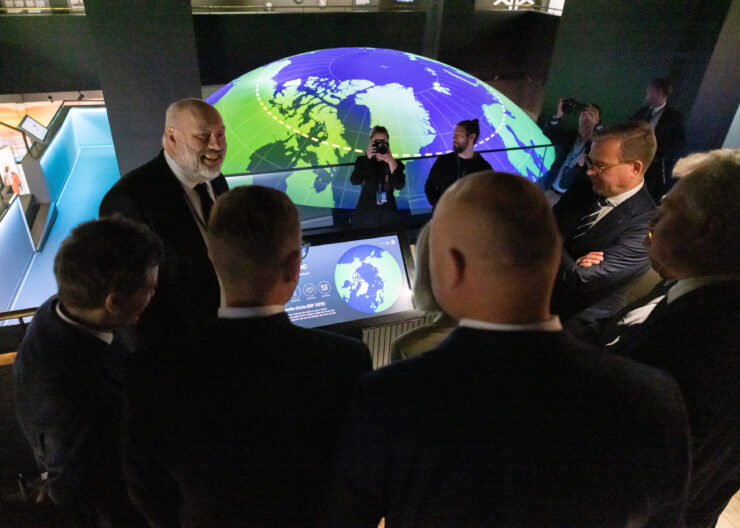
EU-johtajia vieraili Arktikumissa osana Euroopan arktista huippukokousta Rovaniemellä
Euroopan arktinen huippukokous järjestettiin Rovaniemellä 13.–14. syyskuuta 2026. Huippukokouksessa EU:n johtajat kokoontuivat käsittelemään arktiseen alueeseen liittyviä kysymyksiä.
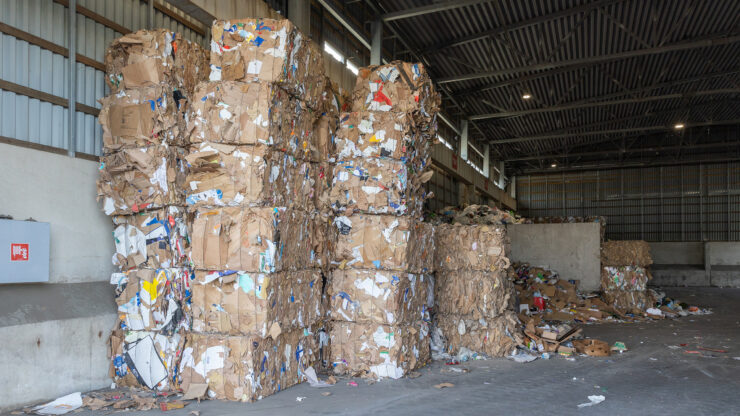
Yhteistyöllä ratkaisuja arktisten kuntien jätehuoltoon
Nadezhda Filimonovan pyrkimys tuoda tutkimuksella konkreettista hyötyä arktiseen alueen asukkaille johdatti hänet jätteisiin ja kiertotalouteen liittyvien haasteiden ja…