
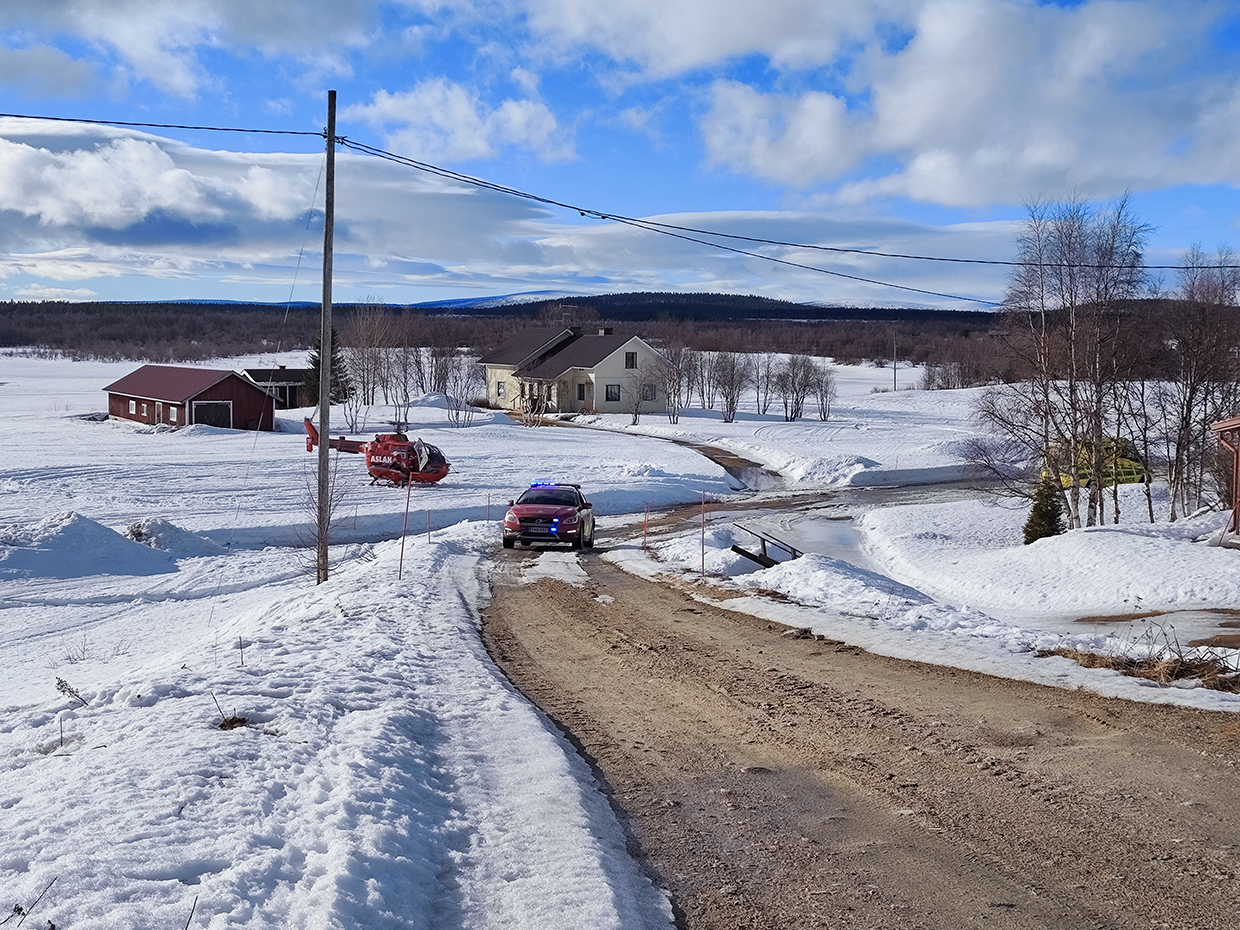
A new project focuses on the viability of volunteer work in northern regions
The importance of volunteer action for societal preparedness and resilience is growing amid global polycrisis. Current global challenges are deeply interconnected and amplify one another, requiring new ways to approach crises and devise future pathways.
A new international project, PREPAREd, led by the Arctic Centre at the University of Lapland, examines how volunteering contributes to resilient societies and what support is needed to maintain viable volunteer organisations in a rapidly changing operating environment.
Volunteers and civil society organisations form a vital, but often less visible, part of society’s capacity to function. Their work can be seen, for example, in preparedness, search-and-rescue activities, environmental protection, and support for local communities on an everyday basis, as well as during times of disruption and crisis. Volunteering is also a central aspect of an inclusive society, offering individuals a sense of belonging and opportunities for agency and lifelong learning.
However, due to public sector austerity, funding for civil society organisations is declining significantly in many countries. At the same time, new expectations and raising responsibilities are being placed on volunteers, particularly in crisis response and care work. The issue is particularly pronounced in rural and sparsely populated areas, where long distances, limited resources, demographic change, and the growing impacts of climate change create additional challenges. Search and rescue is another prominent area, with missions increasing in popular nature-based tourism destinations while relying heavily on volunteers.
PREPAREd starts from this observation and seeks answers to the following question: if volunteering strengthens societal resilience, how can we ensure that volunteering itself remains vibrant and capable of action?
“Volunteering is often discussed as a societal resource, but we less frequently ask what keeps volunteering itself capable of functioning. If we expect more and more from volunteers in the future, we must at the same time ensure that organisations and volunteers have sufficient structures, resources and support for their work. A resilient society needs vibrant volunteering while volunteering provides many opportunities to personal growth and meaningfulness in life for individuals,” says Ari Laakso, Project Manager of the PREPAREd project at the University of Lapland’s Arctic Centre.
Volunteering is not an unlimited resource
In PREPAREd, strengthening volunteering does not mean replacing declining public resources or professional work with volunteers. Instead, the project approaches volunteering as a whole system whose capacity to function depends on people, skills, cooperation, organisations, funding and long-term strategic support.
The project will first map the existing structures, needs and challenges of volunteering in different northern regions. It will then develop training and operational models that can make it easier for new people to get involved, strengthen volunteers’ skills, and support their commitment and well-being. Particular attention will also be paid to the participation of young people in volunteer initiatives.
In addition, the project will explore sustainable models of cooperation, governance and funding that can strengthen the long-term capacity of volunteering to function effectively.
An international project addressing the needs of northern regions
PREPAREd is a 30-month international collaborative project led by the Arctic Centre at the University of Lapland. The project partners are Mid Sweden University in Sweden, UiT – The Arctic University of Norway, and Leave No Trace Ireland.
The approximately €1.3 million project is funded by the EU Interreg Northern Periphery and Arctic Programme and will run from 1 September 2026 to 28 February 2029.
Drawing on experiences from northern and sparsely populated regions, PREPAREd aims to develop models and approaches that can also be applied more broadly. A key starting point for the project is that volunteering’s capacity to respond to society’s changing needs cannot be taken for granted – volunteering itself also needs people, skills, resources and effective structures.
PREPAREd invites organisations and other actors working in volunteering and preparedness to join the discussion throughout the project on how to strengthen the vitality and capacity of volunteering.
PREPAREd at a glance
Duration: 1 September 2026–28 February 2029 (30 months)
Total budget: approximately €1.3 million
Funding: EU Interreg Northern Periphery and Arctic Programme
Lead partner: Arctic Centre, University of Lapland
Project partners: Mid Sweden University, UiT – The Arctic University of Norway, and Leave No Trace Ireland
More news
All news
EU leaders visited Arktikum as a part of the European Arctic Summit held in Rovaniemi
The European Arctic Summit was held in Rovaniemi 13-14 September 2026, where EU leaders gathered to address issues…

Collaboration to find solutions for waste management in Arctic municipalities
Nadezhda Filimonova’s desire to use her research to bring tangible benefits to the residents of the Arctic led…

New EU-funded project Beyond Arctic PASSION officially launched on 1st September, runs for four years
Beyond Arctic PASSION works to build a more coordinated Arctic Observing System of Systems to address the challenges…