

Academy of Finland granted funding to Arctic Centre
Funding was granted for a total four projects led by a researcher from the Arctic Centre.
Funding granted by the Academy of Finland’s Research
Council for Culture and Society:
Post-anthropocentric water relations in the Bothnian
Bay
Research on Arctic water-society
relations is dominated by a particular “hydro-hegemony” of
anthropocentricity, state-centricity and political economy. The project develops an
alternative post-anthropocentric approach to investigate Arctic water-society
relations as complex entanglements of human/non-human relations. The research will
focus on both the past and current water-society relations, multiple
meanings of water, ice and bodies of water, diverse cross-border human/non-human
interactions, multi-level governance and transformations in the watery environments
of the Bothnian Bay.
Project is led by research professor Monica
Tennberg, Arctic Centre, University of Lapland.
Funding: 500 000
€
Rethinking International Relations in an Era of
the Planetocene: Case Arctic Ocean Up to 2050
Project proposes a new paradigm for
world politics: the Planetocene, which emphasizes that all forms of life – including
humankind – are dependent on the well-being of nature. Drawing insights from the
Arctic Ocean, which is under increasing human activity due to climate change,
technological development, and geopolitical rivalry, the project examines how a
planetary just transformation toward the Planetocene could plausibly unfold by 2050.
Its novel approach combines International Relations, Sustainability Science, and
Futures Studies and produces qualitative scenarios at the intersection of art and
science. The project will seek to facilitate “out of the box” thinking about how
world politics could look if traditional state-centric political imaginaries were
replaced with planetary imaginaries and planetary justice was established as the
guiding norm of the international community – a necessary development to save the
Arctic, and the world, from a looming ecological catastrophe.
Project is led by university researcher Sanna Kopra, Arctic Centre,
University of Lapland.
Funding: 497 572 €
Funding granted by the Academy of Finland’s Research Council for Biosciences,
Health and the Environment:
Borealization of the
Finnish subarctic
The boreal forest treeline is
advancing further north with the ongoing rapid warming, which will completely
transform the current Finnish subarctic landscape and the ecosystem services they
provide. So far, attempts to reliably predict shifts in the vegetation or their
effect on ecosystem functions have largely failed, because the location of the
forest line is not regulated by the climate alone. Rather, studies demonstrate
alternative trajectories, where open tundra may turn into a mountain birch forest or
a coniferous forest, or mountain birch forest may turn into open tundra due to
climate-induced shifts in disturbance regimes. ‘BOREARC’ consortium investigates the
rate, the direction and the carbon impact of the forest line advance combining
methodologies of forest sciences, remote sensing, soil ecology and statistical
modeling. The results will advance theoretical concepts of ecosystem states and
inform policy-makers on the expected ecosystem change in this important
region.
Project is led by university researcher Sari Stark,
Arctic Centre, University of Lapland.
Funding: 698 327 €
euros, of which the University of Lapland’s share is 399 899 €
Funding granted by the Academy of Finland’s Research
Council for Natural Sciences and Engineering:
Combining Coupled Modelling and Machine Learning to Constrain
Antarctica’s Uncertain Future
While the
latest technical summary from the Intergovernmental Panel for Climate Change
anticipates several tens of centimeters of sea level rise by the end of the 21st
century, they also state that “In a low-likelihood, high-impact storyline and a
high CO2 emissions scenario, ice-sheet processes characterized by deep uncertainty
could drive global mean sea level rise up to about 5 m by 2150″. Such a high
increase in sea level would be globally catastrophic, but how likely is it? Our
consortium brings together Finland’s leading experts in glaciology, statistics,
high performance computing and machine learning to address this question. We will do
this by simulating the complex networks of interactions between the Antarctic Ice
Sheet and it’s environment. We will combine computer models for these
interactions with efficient machine learning techniques to estimate the possible
range of Antarctica’s global sea level contribution.
Project
is led by research professor John Moore, Arctic Centre, University of Lapland.
Funding: 523 024 €
More
information:
Monica Tennberg, forename.lastname@ulapland.fi, p. 040 019
2005
Sanna Kopra, forename.lastname@ulapland.fi, p. 040 132 4502
Sari Stark, forename.lastname@ulapland.fi, p. 040 484 4254
John
Moore, forename.lastname@ulapland.fi, p. 040 019 4850
More news
All news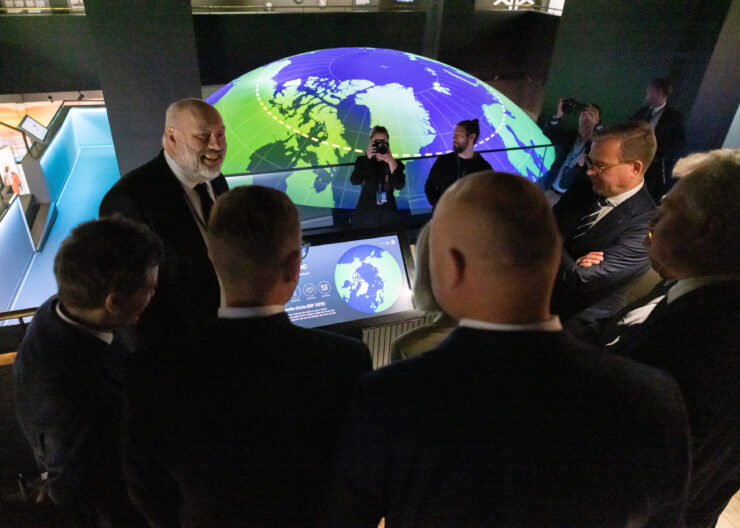
EU leaders visited Arktikum as a part of the European Arctic Summit held in Rovaniemi
The European Arctic Summit was held in Rovaniemi 13-14 September 2026, where EU leaders gathered to address issues…
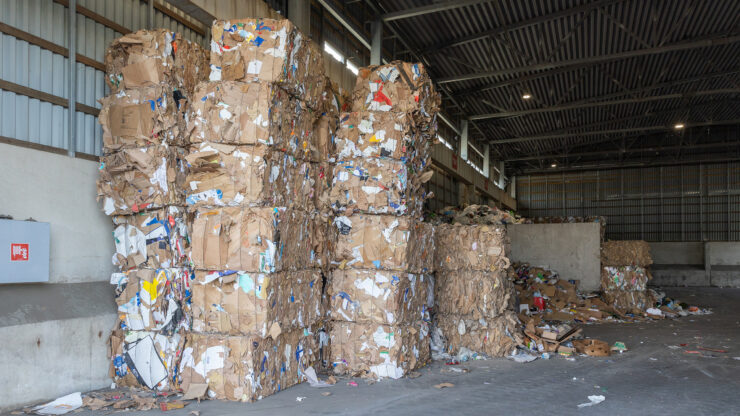
Collaboration to find solutions for waste management in Arctic municipalities
Nadezhda Filimonova’s desire to use her research to bring tangible benefits to the residents of the Arctic led…

New EU-funded project Beyond Arctic PASSION officially launched on 1st September, runs for four years
Beyond Arctic PASSION works to build a more coordinated Arctic Observing System of Systems to address the challenges…