

Behind the scenes of snow research at the Sodankylä supersite
The snow is disappearing from Rovaniemi’s streets, not to be thought about until next winter. Not so for the snow researchers Leena Leppänen and Marina Falke though. Here you can read about their daily work in freezing temperatures and take an introduction to snow research.
Text and photos: Lisa König, Communications
intern at the Arctic Centre, spring 2023
At the
Supersite in Sodankylä, you find a little research village surrounded by forest. It
houses the Arctic Space Centre of the Finnish Meteorological Institute (FMI) and the
Sodankylä Geophysical Observatory but also a lunch place, accommodation for the
researchers, and of course saunas and a barbecue place.
Leena
Leppänen lived there for nine years when she was working full-time for the Finnish
Meteorological Institute. Nowadays, she is working as a researcher for both the
Arctic Centre and the FMI.
The Arctic Space Centre in Sodankylä belongs to the Finnish
Meteorological Institute (Ilmatieteen laitos).
– My
project doesn’t include any regular snow measurements so I am only coming here when
they are needed for a specific reason, Leena says. But when she was still working at
the FMI, she did measurements every winter. In practice, this means: Going outside
and sitting in a snow pit for hours during the coldest times of the year.
– The coldest month is typically January when the sun is not up yet. At the
FMI, we had a limit: If it was colder than minus 25 degrees, we didn’t have to go,
Leena explains. But there have also been exceptions if researchers from further away
were visiting for a short time only.
– In 2014, we had a field
campaign with people from Switzerland and the UK and it was minus 36 degrees outside
during their visit. But we went anyway because they were only staying for two weeks
and these temperatures can last quite long, Leena adds.
It is more bearable to spend the
working day in a snow pit during spring.
Even though
Leena did her first measurement more than ten years ago, she never got too cold
during fieldwork. According to her, it already helps a lot to remember standing up
and walking from time to time. And, of course, the right clothing. Also, the
researchers don’t do field measurements every day. There are many other tasks like
digitalizing and evaluating the data which can be done in a warm office.
– It is quite rare that you have to be outside really the whole day. People
know that it is quite hard so they try to organize it in terms, Leena explains.
Anyway, the work can get exhausting when there is a lot of snow.
– The highest snow cover I remember was a couple of years ago when the
official sensor showed 128 cm. Then you disappear completely inside your pit, Leena
says. No matter how high the snow is, you have to shovel your pit until you reach
the ground. Also, getting to the measurement sites can be a challenge.
When it gets warmer, you can
reach the measurements sites also without a snowmobile.
– If you have a field campaign somewhere where there haven’t been any
measurements before, it can be a bit tricky even with the snowmobile. Especially if
you want to compare data with satellite observations because then you measure at the
same locations where the satellite is overpassing and those can be really random
places, Leena points out.
This year, Leena was helping Marina
Falke, a visiting researcher at the Arctic Centre, with measurements for her
master’s thesis. They started in mid-March after Leena came back from a
research trip to Antarctica. Their last measurements take place in the middle of
May.
– By the end of April, a lot of snow melted
already. But you can still get new snow even in May. And for researching snowpack
evolution, it is also important to measure how snow is melting and changing during
this wet season, Leena explains.
Marina examines,
among other things, the snow density for her master’s
thesis.
Snow measurements can be used
for different focal points
The weekly measurements
by the FMI are mostly connected to satellite or space research. They help for
example to improve satellite observations and new instruments.
–
We want to find out how satellite observations can be used to detect Rain-on-Snow
events and ice layers from snowpack, Leena explains. She uses the collected data
also for the CHARTER project (CHanges in ARctic TERrestrial Biodiversity) at the
Arctic Centre.
Marina observes the impact of different snow
layers on the ground below for her master’s thesis in integrated climate system
sciences at the University of Hamburg.
– Many people are not aware of
how different snow can be and what consequences that might have, Marina says. Her
thesis aims to improve the current snow scheme for a permafrost model by the
University of Hamburg to make future predictions more precise.
–
In climate change when the permafrost becomes warmer and warmer, snow has an
insulating property and can either cool or warm the ground. We are trying to find
out how the permafrost will behave in the future. And for this, it is also important
to model the snow well, Marina explains.
How the
measurements work in practice (featuring Leena and Marina)
Snow measurements in
Sodankylä spring 2023 – YouTube
More news
All news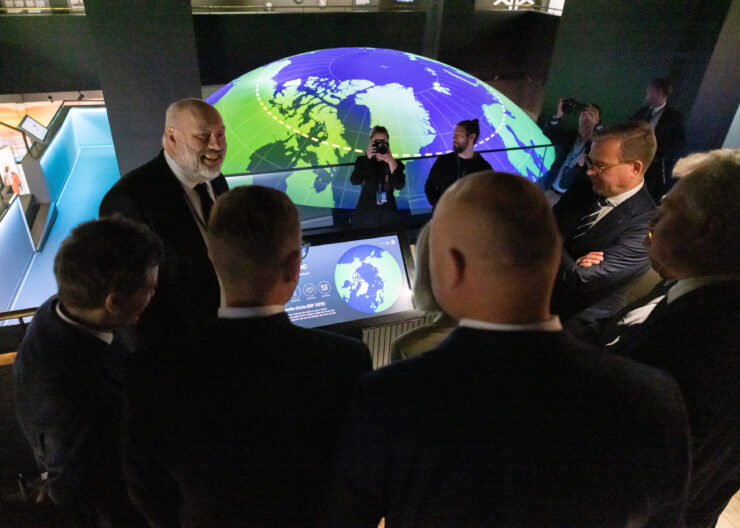
EU leaders visited Arktikum as a part of the European Arctic Summit held in Rovaniemi
The European Arctic Summit was held in Rovaniemi 13-14 September 2026, where EU leaders gathered to address issues…
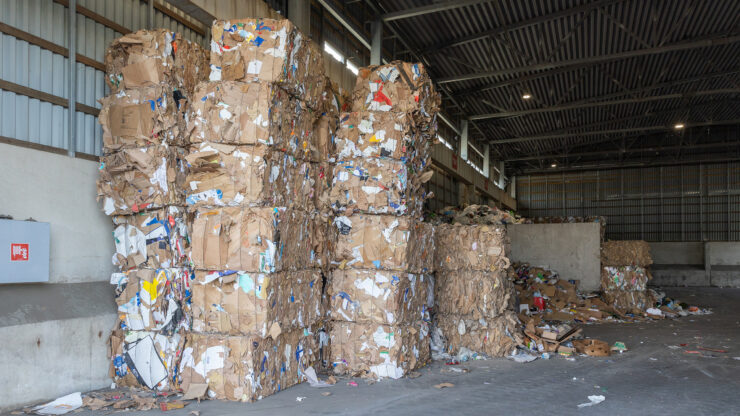
Collaboration to find solutions for waste management in Arctic municipalities
Nadezhda Filimonova’s desire to use her research to bring tangible benefits to the residents of the Arctic led…

New EU-funded project Beyond Arctic PASSION officially launched on 1st September, runs for four years
Beyond Arctic PASSION works to build a more coordinated Arctic Observing System of Systems to address the challenges…