
Doctoral defence: Arctic politics: where knowledge meets power
Amid environmental changes, impacts of the global economy and the scramble for natural resources in the region, the Arctic has become a focus of interest worldwide. Keeping pace with these trends, Arctic politics has embraced an ambition to ‘know’ the Arctic, its resources and potential. Indeed, one distinguishing feature of that politics today is a strong commitment to and consensus on the need to produce knowledge on the region. A crucial consideration in the process – and the subject of Heidi Sinevaara-Niskanen’s doctoral research – is the power of such knowledge in governing development.
Ms. Sinevaara-Niskanen’s thesis examines Arctic politics from
the perspectives of knowledge, power and development. Previous studies on Arctic
politics and knowledge have discussed the production of knowledge, its translation
into practice and its political significance. Questions concerning the power that
operates through knowledge have attracted less attention. By probing the content of
Arctic politics, as well as its power in defining the region’s development and the
agents of that development, the thesis argues that it is, indeed, through knowledge
that Arctic development is made ‘into being’ and rendered governable.
As Ms. Sinevaara-Niskanen points out: “Despite the well-intended aims,
knowing more has not and will not diminish or excise the power entailed in
knowledge. On the contrary, the knowledge that seeks to inform the social
development in the Arctic still produces rather traditional, essentialising and
dichotomous understandings of the region, its inhabitants and development.”
The analysis in the thesis illustrates how accounts of Arctic
development incorporate polarities such as global-local and modern-traditional.
These take part in constructing understandings of those assumed to take part in
discussing Arctic development; “global” comes to mean “Western”, and “local”
“indigenous”.
The context of the study is the Arctic
Council and, in particular, its Sustainable Development Working Group, which
addresses issues of social development. The Council and its working groups have an
acknowledged status as a producers and providers of knowledge on, for and to the
region.
Partial inclusion of
indigeneity and gender
The particular focus
of the research is on indigeneity and gender and the ways in which the related
issues are articulated or ignored in the accounts of Arctic development and of the
agents of that development. The thesis reveals the way in which questions of
indigeneity and gender have been only partially included in Arctic knowledge.
In this connection, Ms. Sinevaara-Niskanen notes: “As they stand,
the treatments of gender and indigeneity fail to recognise these categories as
diverse and socially (re)negotiated”. “Indigenous” is considered stereotypically to
be a synonym for “traditional”, “local” and “communal”. She goes on to remark how
gender is regarded as an issue and quality that is characteristically female and
pertains only to individuals
The thesis points out the need
both to study the politics of Arctic knowledge critically and to diversify existing
understandings of Arctic region, its inhabitants and development.
With a view to future research, Ms. Sinevaara-Niskanen concludes: “We need
more knowledge about the diverse developments unfolding in the Arctic. That
knowledge should not, however, be driven by short-term political and economic goals,
but be knowledge that recognises the multiplicity and complexity of Arctic phenomena
and is aware of the power it entails for steering Arctic development.”
Information of the
defence:
Heidi Sinevaara-Niskanen’s doctoral
thesis, Setting the Stage for Arctic Development: Politics of Knowledge
and the Power of Presence, will be publicly examined in the Faculty of
Education on Friday, 29 May at noon, in lecture hall 3, Yliopistonkatu 8, Rovaniemi.
The Opponent will be Annika E. Nilsson, Senior Research Fellow at the Stockholm
Environment Institute, and the Custos Päivi Naskali, Professor in Women’s Studies,
Faculty of Education, at the University of Lapland. Welcome!
Information on the doctoral
candidate:
Heidi Sinevaara-Niskanen (born
1980 in Kuopio) completed her matriculation examination at Kuopion klassillinen
lukio Upper Secondary School in Kuopio in 1998. She graduated with a master’s degree
in social sciences from the University of Lapland in 2005 and completed pedagogical
studies in 2011.
Ms. Sinevaara-Niskanen has handled many
administrative, teaching and research responsibilities at the University of Lapland
since 2002. Among other duties, she has worked as a researcher in the Finnish
Research School in Women’s and Gender Studies in (2007 to 2010), as a university
lecturer in Gender Studies (2012 ̶ 2013) and as a university teacher in research
methods (2014). Ms. Sinevaara-Niskanen is a member of the research group “Northern
Political Economy” hosted by the Arctic Centre.
Currently
she works as a grant-funded researcher in gender studies in the Faculty of
Education.
Further
information:
Heidi Sinevaara-Niskanen
Tel. 044 5897 322
heidi.sinevaara-niskanen(at)ulapland.fi
Press copies of the thesis are available from Lapland University
Press, tel. 040 821 4242, julkaisu(at)ulapland.fi
Publication information:
Heidi Sinevaara-Niskanen: Setting the Stage for Arctic Development:
Politics of Knowledge and the Power of Presence. Acta Universitatis
Lapponiensis 304. ISBN 978-952-484-831-2. ISSN 0788-7604.
ULapland/Communications/RJ
More news
All news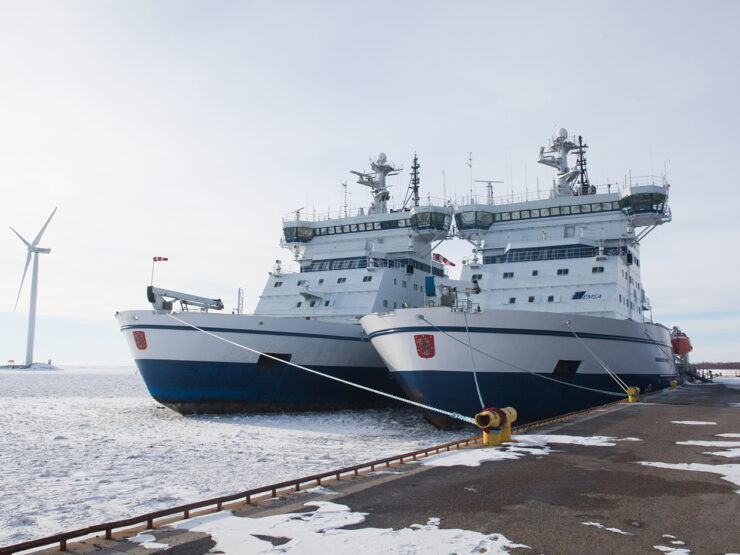
New project to examine the use of AI in shipping
AUTO-MARE project aims to develop framework for environmentally just, transparent, and accountable use of AI in shipping industry.
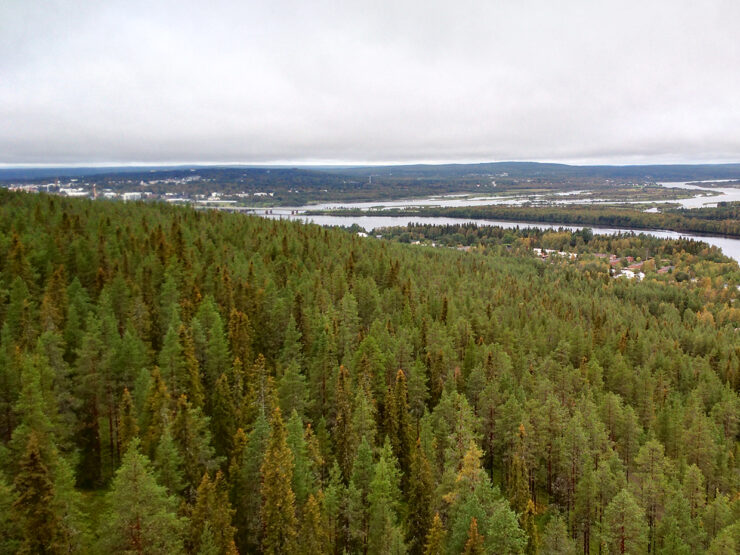
New funding to suport community-based green transition projects in the Arctic
The project aims at supporting fair, transparent, and locally accepted green transition projects in the Arctic region. The…
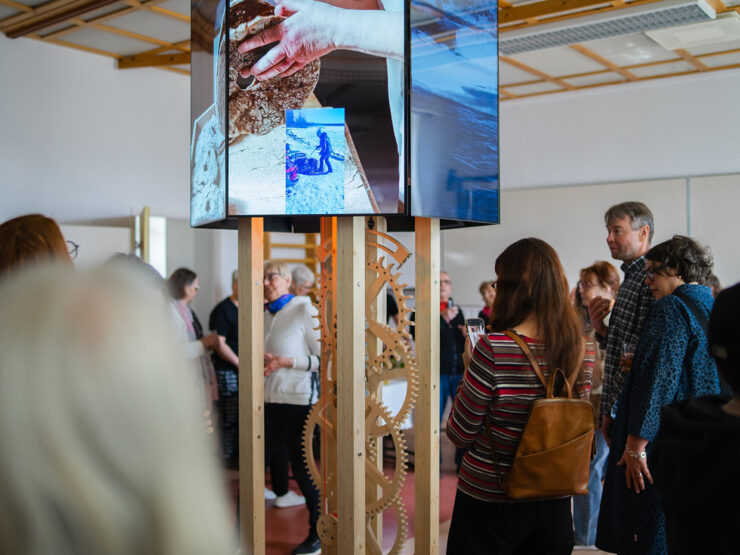
The World’s Most Valuable Clock preserves valuable moments of life
The World’s Most Valuable Clock is an artwork created as part of the Oulu2026 Climate Clock Project. Arctic…