

Face of the Month: We all eat, and that is why Dele Raheem became a researcher
All food-related processes must be sustainable, because the way we eat will affect the whole planet.
If you spend your school years in Lagos, in the
biggest city of the largest country in Africa by population, and study food sciences
up to a doctoral degree in Helsinki and the UK, it does not seem very likely that
you would end up in the Arctic Centre at the University of Lapland in Rovaniemi.
For Bamidele “Dele” Raheem, this originally
happened by chance. However, that is no longer the case.
Life pushes us around, and it pushed Dele to Rovaniemi. Then he cleared the
way for himself to the Arctic Centre. Arctic Centre is a multidisciplinary research
institute, and that was exactly what a doctor who had ended up in Rovaniemi needed.
No food science? That did not matter. Everyone must eat, and if the place is
multidisciplinary, he would find a connection somehow.
That was exactly what happened. The Northern Institute of Environmental and
Minority Law is one of the Research Groups at the Arctic Centre. In recent years, it
has focused on human security in the Arctic, i.e. on issues that affect people’s
daily lives and everyday survival. One of these issues is food security.
– We all eat. Food security is part of human security,
Raheem says.
Currently, Raheem is involved in a
project that studies how the food companies in Lapland could benefit from digital
services in their operations. Another project studies the importance of traditional
and local food for food safety in the northernmost regions of Europe.
– I can see a link between the Arctic Centre and food science,
Raheem says.
Events such as the Chernobyl nuclear accident may
affect food quality and food security in the north. According to him, it is to
Finland’s advantage that the food is of good quality. The northern growth factors,
such as the amount of UV radiation and the rapid growth season help the plants
defend themselves, which in turn develops properties that improve the quality of
food crops from the human point of view.
For
academic project workers, the future is uncertain, but when you listen to Dele
Raheem’s life story, it becomes clear that he has influenced his own destiny before.
In the beginning of the 1960’s, there were a
million inhabitants in Lagos. Raheem left the city behind in 1988, when the
population was 4.5 million. Now the population estimates rise up to 20 million. His
hometown has grown at a brisk rate, and it is no wonder that food security has
seemed important.
Raheem began studying food
sciences first in Lagos. From there, he managed to join the Master’s program of
the Faculty of Agriculture and Forestry at the University of Helsinki. He continued
his career as a researcher in Helsinki and in England at Lincoln and Greenwich
Universities. Raheem defended his doctoral thesis at the University of Helsinki in
2006.
More and more often, family reasons started pulling Raheem to Lapland, and
after earning his doctoral degree, he settled permanently in Rovaniemi.
Where could one find work in Rovaniemi? On the internet, he found the University of
Lapland and its research institute. “Maybe I could fit in there”, Raheem thought,
and turned his idea into action. He got in touch with researchers at the Arctic
Centre and the Employment office supported a work trial period. The first steps did
not result in anything, but the connections was made. Before long, Raheem found
himself in research projects directly related to his area of expertise.
In his office, Raheem talks about climate change, food security
and food chains. How is the food processed? What are the impacts on emissions? What
conflicting factors do we need to consider? These are major issues.
– The way we eat affects the whole planet. All food-related
processes must be sustainable.
Many things in
Rovaniemi are completely different from Lagos, Helsinki, Nottingham or London, the
cities where he lived before. The child of metropolises has gradually had to become
accustomed to abundant silence and peace. At the same time, the food safety
researcher also has gotten used to eating local food.
– At first, it did not have much taste. However, one has to adjust.
Bamidele “Dele” Raheem
- D.Sc., Doctor in Food Science (ETT)
- Visiting Researcher, NIEM
- Research areas:
Food security, food nutrition, the impacts of climate on food security - Motto: “Do not put off till the evening what you can do in the
morning.” - Dele Raheem’s researcher profile in Lacris
Text: Markku Heikkilä
Photos: Anna
Muotka
More news
All news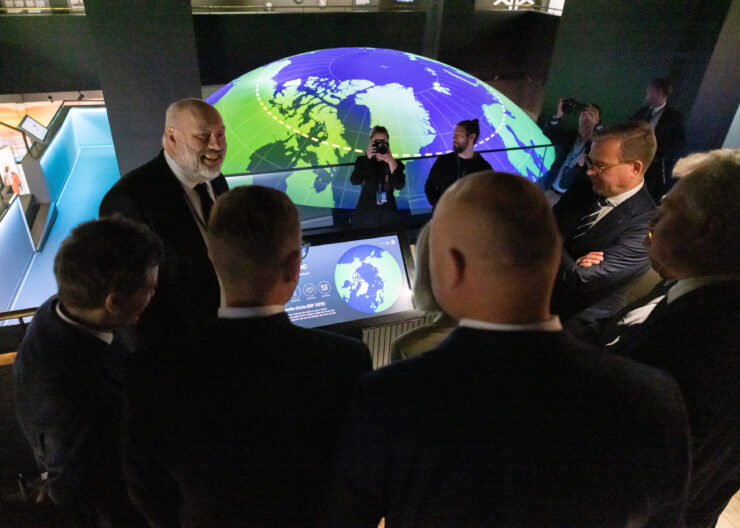
EU leaders visited Arktikum as a part of the European Arctic Summit held in Rovaniemi
The European Arctic Summit was held in Rovaniemi 13-14 September 2026, where EU leaders gathered to address issues…
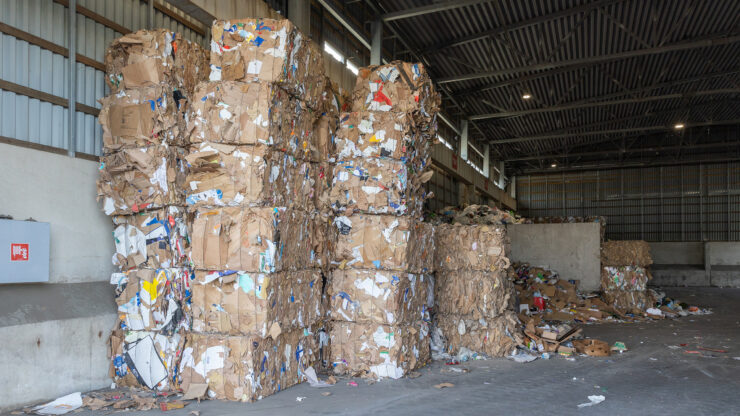
Collaboration to find solutions for waste management in Arctic municipalities
Nadezhda Filimonova’s desire to use her research to bring tangible benefits to the residents of the Arctic led…

New EU-funded project Beyond Arctic PASSION officially launched on 1st September, runs for four years
Beyond Arctic PASSION works to build a more coordinated Arctic Observing System of Systems to address the challenges…