

From throw away and replace culture to circularity
New Finnish-Argentinian project CIBIECO focuses on the ideas of the circular bioeconomy and their practical implementation in small enterprises in Finland and Argentina.
Doing more with less, building capital from waste
rather than reducing it, and keeping economy in the circular loop are the core
issues of the Circular Bioeconomy: From Concept to Practice -project (CIBIECO)
funded by TFK 2022 Team Finland Knowledge Programme.
Project leader Anna Stammler-Gossmann from the Arctic Centre at the
University of Lapland says that as humans, we have adopted a linear so-called “take,
make and dispose” approach.
– In the living world,
there is no waste disposal site – the waste of one species is the food of another,
things grow and then die, and nutrients return to the soil. Can we change our linear
ways of thinking so that we operate in the same circular way as the more-than-human
world?
CIBIECO project stems from the idea that the concept of
circular bioeconomy, which offers new ways to achieve more sustainable economic
growth and go beyond a merely recycling process, is still a field in its infancy.
While recycling begins at the end, a circular economy goes right back to the
beginning preventing waste from being created in the first place. However, there are
many structural, legal and cost-related challenges in implementing this concept in
practice.
Objectives of the project are
built around four critical fronts:
1. Education:
To develop and integrate a new field of study based on research and the needs of
communities working life in a comparative context.
2.
Knowledge exchange: To assess the experiences of transferring the circular
bio-economy concept to practice in both polar regions and identify best
practices.
3. Working life cooperation: To enhance the
co-production of knowledge between education and local community enterprises.
4. Long-term partnership: To develop ideas for future educational
and research activities.
CIBIECO project partners represent
different disciplines – social anthropology, applied biology, food science,
chemistry, material technology, and biomass refining technology.
The project consortium includes four Higher Educational
Institutions as members: Arctic Centre (University of Lapland, Finland, lead
institution), Centria University of Applied Sciences (Finland), National University
of Río Cuarto (Argentina), National University of Tierra del Fuego, Antarctica and
South Atlantic Islands (Argentina).
– The CIBIECO
project combines research, teaching and local communities working life. In this way,
it offers a great opportunity for the expertise exchange in issues of regional
transition from a “linear” to “circular” economy, identifying
the local approaches to cycle the valuable resources and contributing to the
empowerment of local communities, Stammler-Gossmann concludes.
Recycling: Reuse
of a previously processed or waste material. Recycling is an important process, but
it is still not enough to overcome the amount of waste we produce; toprevent the
pollution from being created in the first place and it is cost consuming: waste
collection, sorting, processing, materials are getting weaker during the recycling
process and cannot be recycled repeatedly. Photo: Anna Stammler-Gossmann
Upcycling: From car tyres to flowerbed. Upcycling is a valuable
strategy and a creative process in producing a higher quality product that already
have a story. However, the resulting product still needs to enter the recycling
infrastructure. Photo: Anna Stammler-Gossmann.
More
information:
Dr. Anna Stammler-Gossmann
University Researcher
Coordinator of the Arctic Studies Programme
Arctic Centre, University of Lapland
Anna.Stammler-Gossmann at
ulapland.fi
+358 400 882 065
More news
All news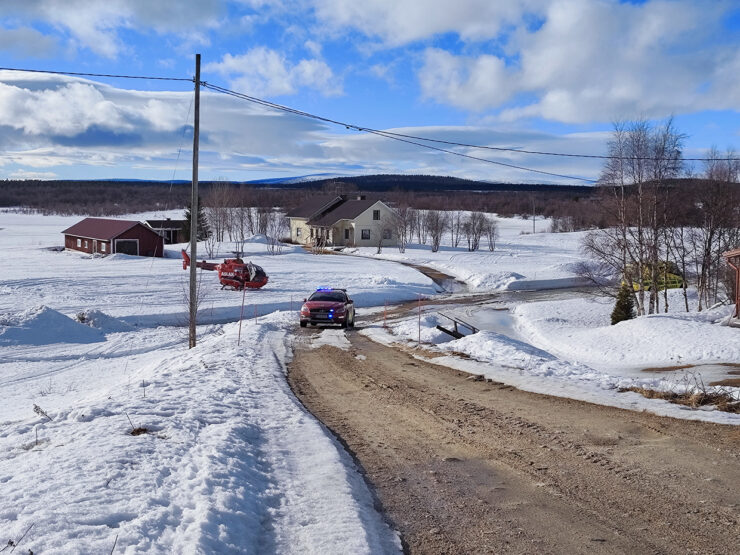
A new project focuses on the viability of volunteer work in northern regions
The importance of volunteer action for societal preparedness and resilience is growing amid global polycrisis. Current global challenges…
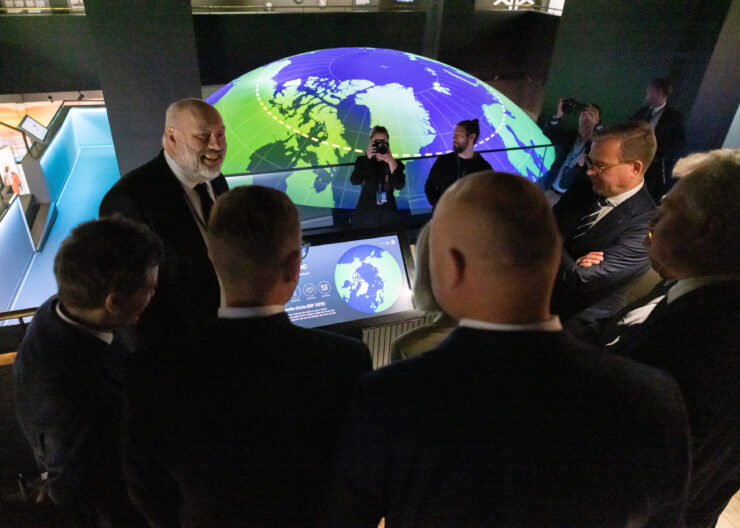
EU leaders visited Arktikum as a part of the European Arctic Summit held in Rovaniemi
The European Arctic Summit was held in Rovaniemi 13-14 September 2026, where EU leaders gathered to address issues…
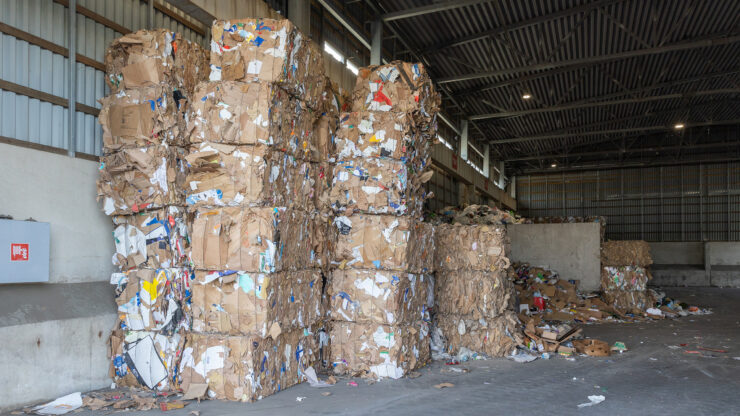
Collaboration to find solutions for waste management in Arctic municipalities
Nadezhda Filimonova’s desire to use her research to bring tangible benefits to the residents of the Arctic led…