
The European Union’s “integrated policy for the Arctic”, stemming from the Joint Communication of 27 April 2016, can productively interact with Nordic cooperation frameworks in order to support developments in Arctic Europe. The study Arctic Europe: Bringing together the EU Arctic Policy and Nordic cooperation, carried out by researchers from the Arctic Centre of the University of Lapland, concludes that the 2016 Joint Communication creates opportunities for formulating a common trans-national strategy for Arctic Europe.
In particular, region’s potential in bioeconomy and Arctic
technological innovation is highlighted. These opportunities would be enhanced by
stronger alignment and synergies between the EU’s Arctic policy actions and the work
taking place within the international and cross-border Nordic cooperation platforms.
It is important to emphasize the relevance of development in Arctic Europe for the
whole EU. Targeted investments in the region have potential to benefit Nordic as
well as European economic actors.
Common themes of Nordic
cooperation and the EU’s Arctic policy include: Arctic bioeconomy, innovative cold
climate technologies, digitization, and facilitating circular economy solutions
suitable for sparsely populated areas. The EU’s support for developments in these
sectors appears more feasible than for extractive industries, despite the fact that
the latter receive most attention of both analysts and policy-makers. Furthermore,
EU-Nordic cooperation as regards tackling border obstacles should continue, with
special attention given to enhancing trans-border activities of the Sámi. The latter
spaces for collaboration are not part of the EU’s Arctic policy but they constitute
important EU contributions to stronger integration of Arctic Europe as a distinct,
successful region.
The 2016 Joint Communication has
launched – in the format of the EU-Arctic Stakeholder Forum – a process aimed at
identifying key investment and research priorities, primarily for the European
Arctic. The Forum could be used as a catalyst in the formulation of common strategy
for Arctic Europe. Such a strategy could be based on the logic of smart
specialization. In order to support drafting of project proposals that address
common priorities, a special seed money facility could be established. Common
EU-Nordic Arctic conferences could enhance long-term cooperation between various
funding programmes operating in the region.
Arctic Europe
is an integral and indispensable part of the socio-economic landscape of the EU.
In-vestments in the region can benefit whole Europe. Region has potential to
facilitate innovative solutions fueling European green growth. It can be the first
stage for European companies’ expansion to other parts of the circumpolar Arctic.
Europe’s northernmost regions can increasingly act as living labs for new
technologies and new governance solutions. Arctic Europe remains an important part
of Europe’s cultural and natural landscape and a source of natural resources for the
European economy. The success of Arctic Europe will enhance its role as the EU’s
gateway to Russia and the Arctic.
The study was produced
within the project Finland’s Arctic Council chairmanship in the times of
increasing uncertainty (Suomen puheenjohtajuus arktisessa neuvostossa kasvaneen
epävarmuuden aikakaudella). The project is carried out as part of the implementation
of the 2016 Government analysis, assessment and research activities. It is
implemented jointly by the Arctic Centre of the University of Lapland, the Finnish
Institute of International Affairs and the Marine Research Centre of the Finnish
Environment Institute.
For more information on the Government’s
analysis, assessment and research activities, see tietokayttoon.fi
Inquiries:
Adam Stepien, researcher at the Arctic Centre of the University of Lapland, +358 40
484 4298, astepien(at)ulapland.fi and prof. Timo Koivurova, director of the Arctic
Centre of the University of Lapland, +358 40 551 9522,
timo.koivurova(at)ulapland.fi
Government Communications Department 10.2.2017 12.28
Press
release 63/2017
More news
All news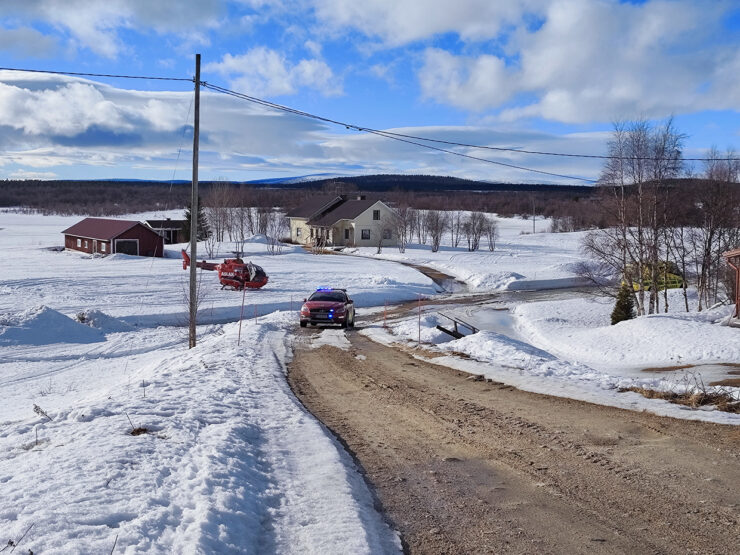
A new project focuses on the viability of volunteer work in northern regions
The importance of volunteer action for societal preparedness and resilience is growing amid global polycrisis. Current global challenges…
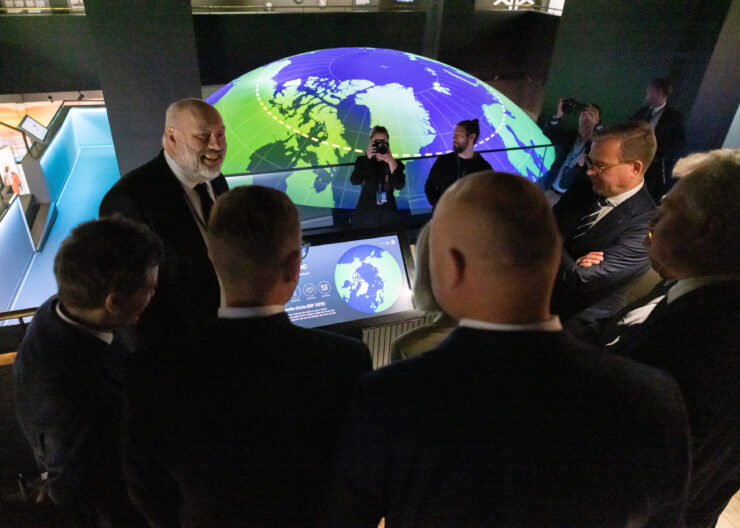
EU leaders visited Arktikum as a part of the European Arctic Summit held in Rovaniemi
The European Arctic Summit was held in Rovaniemi 13-14 September 2026, where EU leaders gathered to address issues…
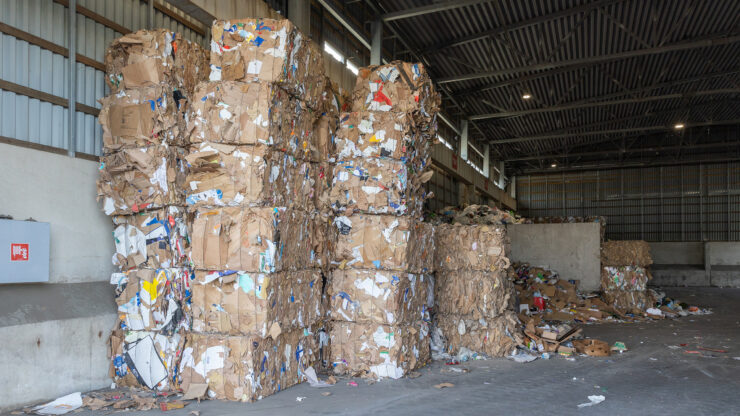
Collaboration to find solutions for waste management in Arctic municipalities
Nadezhda Filimonova’s desire to use her research to bring tangible benefits to the residents of the Arctic led…