
Report on the adaptation actions for a changing Arctic in the Barents Area
Arctic Monitoring and Assessment Programme (AMAP) has released the Barents Area assessment report, a result of four years of research towards understanding the adaptive capacity of the Norwegian, Swedish, Finnish and Russian Arctic.
The Adaptation Actions for a Changing Arctic (AACA) report
carefully documents environmental, climatic and social information to highlights the
interactions between them. This knowledge supports and informs decision makers,
communities and businesses, helping people adapt to the inevitability of the warming
climate. The Barents Area Report, one of three requested by the Arctic Council,
proposes how best to meet these changes with efficient adaptation.
Arctic Centre at the University of Lapland is one of the partners in
the AMAP programme and co-writers in the report.
Change and arctic opportunities
Change is coming to the Arctic, and communities must adapt. Both
opportunities, fisheries and shipping routes opening, and challenges, extreme
weather, are some key challenges to adaptation.
• The Gulf
Stream makes Barents one of the warmest Arctic areas and the Barents Sea will be the
first Arctic region to be free of sea ice year around.
• Retreating sea
ice edges are opening new grounds for trawling and transport routes while impacting
fish and animals dependent on sea ice.
• Rainfall, flooding, avalanches
and landslides will increase.
Expected
change
The Barents Sea covers almost
million and a half square kilometers of water has an important role for the
atmosphere and the movement of ocean currents. Global warming in the Arctic occurs
more than double than the rest of the world and research has projected the Barents
Sea will be the first year round ice-free region.
As the
Barents Sea opens, cooperation is essential. Fisheries rely on international
cooperation and agreements for success when fish stocks migrate to new waters and
new fish stocks appear because of increased ocean temperatures. Some fish species
(e.g. Atlantic cod and haddock) will shift northwards due to climate change, while
Arctic species will retreat and decrease. Animals who need sea ice will loose their
habitat while open water animals, like baleen whales may benefit from the warming.
The open water will also change the weather, causing
heavier rainfall. On the open sea, extreme wave heights and storms of over 100 km
long could result. However, polar lows should decrease in the future.
More rain will fall in winter. On land, the rain will fall on snow,
causing natural hazards. Landslides and avalanches will increase and flooding will
become more frequent and heavier. The rain on snow will freeze in layers, making it
difficult for reindeer to reach their food through ice. As a result, more reindeer
will die, impacting the people who depend on them.
The warmer
temperature will continue to melt the frozen ground, permafrost, causing damage to
infrastructure. Economic demand also becomes part of the picture – without it, there
is no way to reap the benefits of additional ocean and land advantages.
Adaptation foundations and processes
Beyond natural factors, global, social,
economic, political and cultural changes also directly affect adaptability. A
complex web of issues from nature, economics and government directly affect local
communities. “Using these resources means great responsibility for safeguarding
local and indigenous communities.” Dr. Grete Hovelsrud, Nord University, Bodø.
From the many people in the Arctic, Indigenous communities
face a greater range of challenges including loss of identity, language, traditional
food culture, and land. Beyond global warming there are everyday issues of poor
economy and challenges of working with the mainstream authorities. By addressing
these issues now, policy makers could avoid worsening them in the future.
More information:
Research Professor Monica Tennberg
Arctic Centre, University of Lapland
monica.tennberg@ulapland.fi,
+358 040 019 2005
Social Anthropologist Grete
Hovelsrud
Nord University, Bodø, Norway
grete.hovelsrud@nord.no, +47 95 80 60 46
Senior Researcher
Annika E. Nilsson
Stockholm Environment Institute
annika.nilsson@sei-international.org +46 73707 8541
AACA
Barents co-chair Marianne Kroglund
Norwegian Environment Agency
marianne.kroglund@miljodir.no, tel: +47 48005055
More news
All news
Call for Papers: 14th Volume of Current Developments in Arctic Law
The next volume is to be published in December 2026, submission deadline is in the end of October.
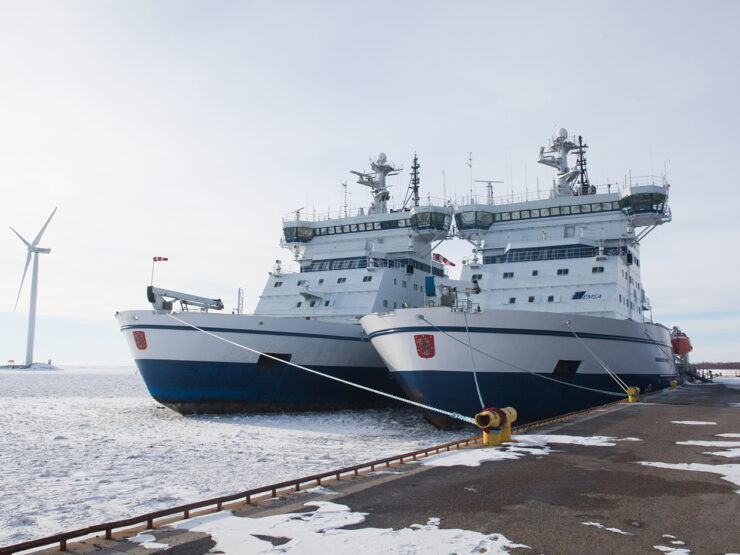
New project to examine the use of AI in shipping
AUTO-MARE project aims to develop framework for environmentally just, transparent, and accountable use of AI in shipping industry.
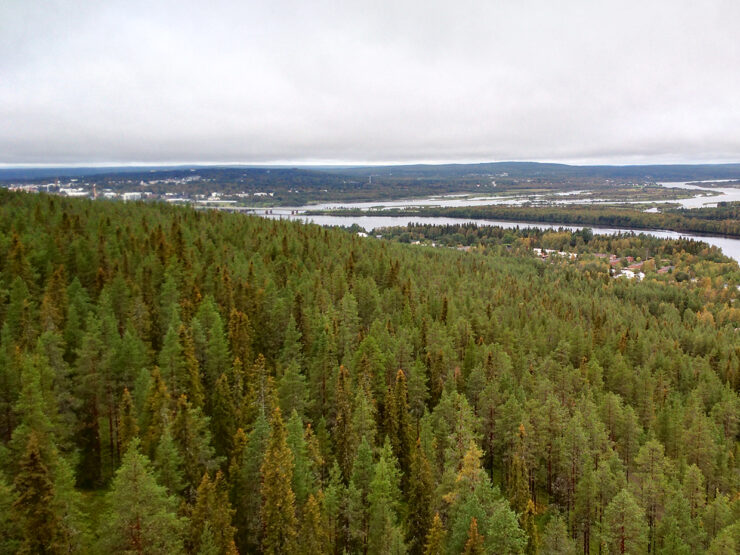
New funding to suport community-based green transition projects in the Arctic
The project aims at supporting fair, transparent, and locally accepted green transition projects in the Arctic region. The…