
The 3rd China-Nordic Arctic Cooperation Symposium, 2015, Call For Abstracts
On the 26-28 May 2015 the 3rd China-Nordic Arctic Cooperation Symposium will take place in Shanghai and the conference theme is “Arctic Synergies: Polices and Best Practices”. The Arctic Centre at the University of Lapland is the representative of Finland in the cooperation.
Proposals are welcome from researchers affiliated with
Nordic and Chinese universities, research institutes, think tanks and organizations.
All presentations will focus on Arctic-related issues, within one of the session
topics, and the deadline for abstract submission is on February 27, 2015.
Below is a more detailed description of each
session:
Session 1, The Evolution of Arctic
Governance: Geopolitical, Legal, and Socio-Economic Issues
The Arctic has, in recent years, assumed global importance
because of the impact of climate change, the region’s natural resources, and the
economic potential offered by the opening of Arctic sea routes. What are the main
political, legal and socio-economic issues in the evolution of Arctic governance? Is
the current governance framework based on the United Nations Law of the Sea
Convention (UNCLOS) sufficient to meet the challenges and opportunities in the
region? To which extend would the tension between Russia and U.S.-EU in the
aftermath of Ukrainian crisis affect Arctic governance and Arctic cooperation? How
does the Arctic fit into broader geopolitical developments taking place in the
world? What is the role of the Arctic Council? What is the significance of the
decision to accept five Asian countries (China, India, Singapore, South Korea and
Japan) as observers to the Arctic Council? How does increased interest in the Arctic
contribute to sustainable development and human security at local, national and
regional levels in the Arctic region? How do these changes affect the participation
of indigenous communities in Arctic governance and the longstanding culture for open
dialogue and informal deliberation within the Arctic Council?
Session 2, The Impact of Scientific Developments on Arctic
Strategies
Scientific research and
cooperation has been at the very center of Arctic policy-making since the Arctic
Environmental Protection Strategy was launched in 1991, which subsequently led to
the establishment of the Arctic Council in 1996. Has science remained as a key
element in Arctic policies with the promotion and popularization of Arctic affairs?
How do outside stakeholders, such as China, see the role of science and research in
Arctic policy-making? What are the implications of Arctic Science Summit Week 2015
and Third International Conference on the Arctic Research Planning (ICARP III) on
Arctic Science and governance?
Session 3,
The Framing and Implementation of Chinese and Nordic Arctic Policies
All the Nordic States have, in the last few
years, published official Arctic strategies. While China has not yet taken this
step, it is possible that a policy statement or a White Paper will be forthcoming.
What are the main concerns of the Nordic countries, when it comes to the Arctic?
What do the Nordic Arctic policies have in common and how do they differ from each
other? What is the role for Arctic policy papers from regional or sub regional
organizations, such as the Nordic Council, the West Nordic Council and the Barents
Council? How do European supranational and intergovernmental organizations, such has
the European Union and European Free Trade Association, fit into Arctic
policy-making? What Arctic-related policy cooperation is in place between China and
the Nordic Countries? How can the China-Nordic Arctic cooperation framework be
developed further through bilateral and multilateral means?
Session 4, Trans-Arctic Synergies in Arctic Economic Development
Following the Arctic Council’s 2013
Ministerial Meeting in Kiruna over half of the G20 countries are now represented at
the Arctic table. The Arctic region is playing a more important role on the world
stage as part of globalization, economic development, energy utilization,
environmental protection and international security. The World Economic Forum, in
its 2014 report Demystifying the Arctic, estimated the Arctic region’s current
annual economy at roughly $230 billion; this figure, however, could rise in the
coming years, with the Arctic believed to hold about 20% of Earth’s remaining
recoverable natural resources (including substantial reserves of oil and gas,
minerals, renewable energy sources, fresh water and seafood). Questions remain where
investors and labor force for Arctic projects will come from; in addition,
international cooperation and best practices are likely to remain as critical
success factors for many of the Arctic’s potential economic opportunities. What
role will outside stakeholders, including Asian and European economies, play in the
economic development of the Arctic? In which industries are the interests of local
Arctic residents and outside stakeholders most aligned? Will it be in developing
infrastructure, creating new extensions of international transportation networks (in
shipping and aviation), developing trade relations and/or investing in natural
resource development?
More information: 3rd
China-Nordic Arctic Symposium Call for Abstracts.pdf
More news
All news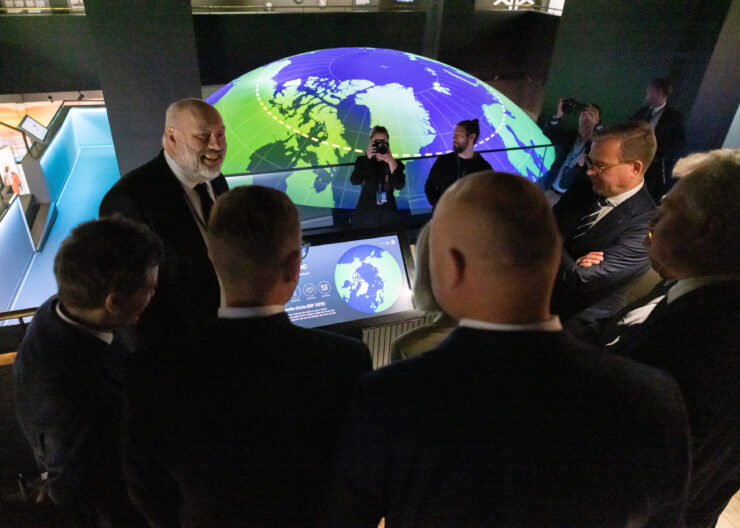
EU leaders visited Arktikum as a part of the European Arctic Summit held in Rovaniemi
The European Arctic Summit was held in Rovaniemi 13-14 September 2026, where EU leaders gathered to address issues…
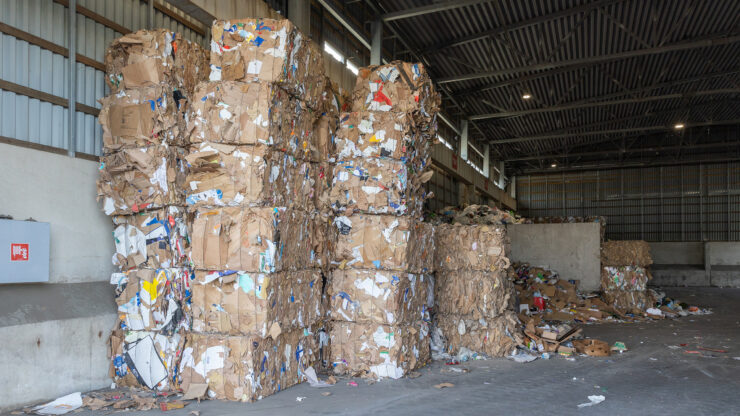
Collaboration to find solutions for waste management in Arctic municipalities
Nadezhda Filimonova’s desire to use her research to bring tangible benefits to the residents of the Arctic led…

New EU-funded project Beyond Arctic PASSION officially launched on 1st September, runs for four years
Beyond Arctic PASSION works to build a more coordinated Arctic Observing System of Systems to address the challenges…