

Transboundary collaboration is important for the conservation of biodiversity
The Arctic Centre of the University of Lapland participates in the TRANSNATURE research project which examines different examples of transboundary governance for the conservation of biodiversity across Europe. The goal is to give policy recommendations for the EU based on the findings of the research.
The TRANSNATURE project includes four case studies about
transboundary cooperation between Spain and Portugal, Italy and Slovenia, Netherland
and Belgium, and Finland, Sweden and Norway. Three other partner institutions are
The Institute for Comparative Federalism at Eurac Research in Italy (lead
institution), The Universitat Rovira i Virgili in Spain and Ghent University in
Belgium.
Researchers of the Arctic Centre, Katharina
Heinrich, Paula Tulppo, Sanna Kopra and Nuccio Mazzullo, participate in the project
with the case study Baltic to Barents. Among the partner institutions, this case
study gives the project an interdisciplinary research focus. Baltic to Barents
includes anthropology, administrative science and legal science. The governance
aspect is the main lens that is used in this case study.
Bringing stakeholder’s voice to the
forefront
The region for Baltic to Barents
includes the River Tornionjoki river basin between Finland and Sweden, Háldi
Transboundary Area between Finland and Norway and Pasvik-Inari Park between the
eastern border of Finland and Norway.
“All these examples
have different ecological features, but the cultural and social values and the value
of nature itself are similar”, Heinrich explains.
“We look
at the governance mechanisms in these areas, how they are working and how people see
governance mechanisms related to biodiversity conservation. We are having interviews
with different stakeholders, who are involved in governance mechanisms in these
areas”, Tulppo continues.
Researchers of
the project in Tarragona.
Some preliminary findings have
already been made. Even though these regions are different and there is a geographic
disconnection to some extent, there are a lot of similarities in how people think
about nature.
The researchers have noticed that no matter
which side of the border people are, they seem to have similar understanding of what
are the challenges but also what the good things about transboundary collaboration
are. People on the ground really value these collaborations and think it is very
needed for the sake of conservation of biodiversity.
The
collaboration is easier because these regions have a common environment, and they
work under the same international agreements.
“There might
be some differences in the governance structures, but I think they are functioning
quite similarly at the local level. The goals for biodiversity conservation are the
same in each country”, says Heinrich.
According to the
researchers, the project shows how geopolitical topics influence the relationship
between countries. Nature is not restricted by borders as they are created by
humans.
“This is why it is very important that
transboundary collaboration for the conservation of biodiversity really works. The
collaboration seems to work at least in our case, but it is good to look at it ever
now and then to see how it could be embowered and what could be done differently”,
Tulppo adds.
Funding of the project:
Biodiversa+, the European Biodiversity Partnership under the 2021-2022
BiodivProtect joint call for research proposals, co-funded by the European
Commission (GA N°101052342) and with the funding organizations, the Autonomous
Province of Bolzano-Bozen – South Tyrol, the Academy of Finland, the Agenda Estatal
de Investigación, and the Research Foundation Flanders.
Timeline for the project: 1/2023-2/2026
More
information:
Arctic Centre, University of Lapland
Katharina Heinrich, Junior Researcher
katharina.heinrich@ulapland.fi
Paula Tulppo,
Researcher
paula.tulppo@ulapland.fi
Nuccio
Mazzullo, Senior Researcher
nuccio.mazzullo@ulapland.fi
Sanna Kopra, Research Professor and Team Leader
sanna.kopra@ulapland.fi
More news
All news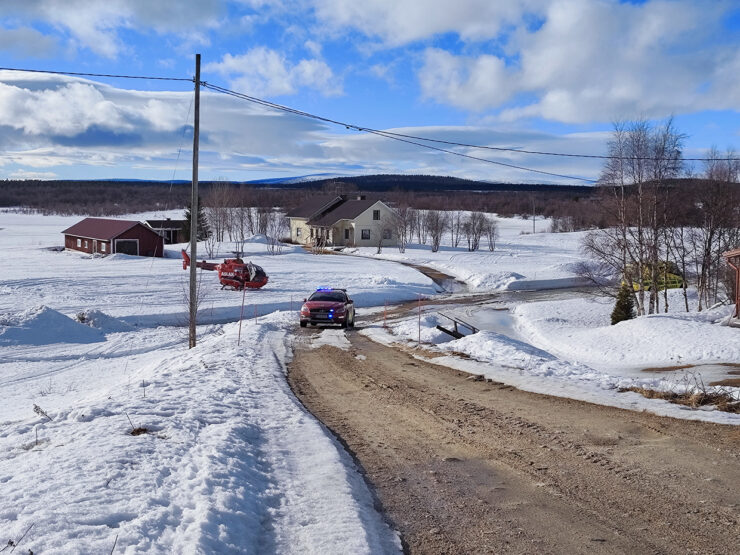
A new project focuses on the viability of volunteer work in northern regions
The importance of volunteer action for societal preparedness and resilience is growing amid global polycrisis. Current global challenges…
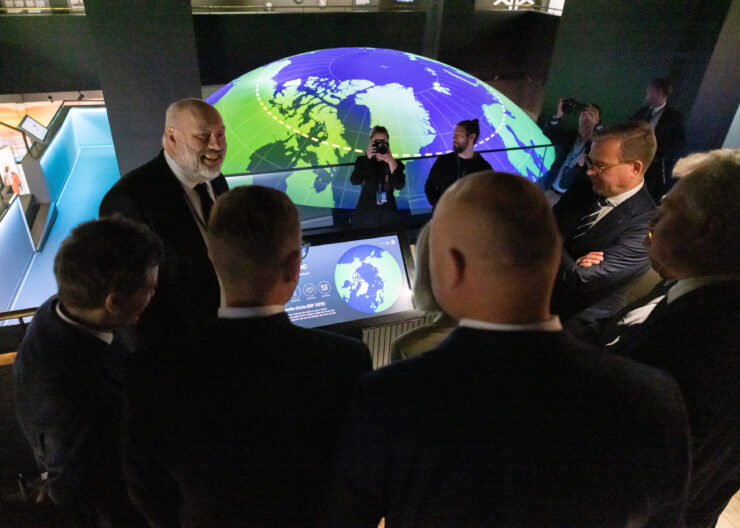
EU leaders visited Arktikum as a part of the European Arctic Summit held in Rovaniemi
The European Arctic Summit was held in Rovaniemi 13-14 September 2026, where EU leaders gathered to address issues…
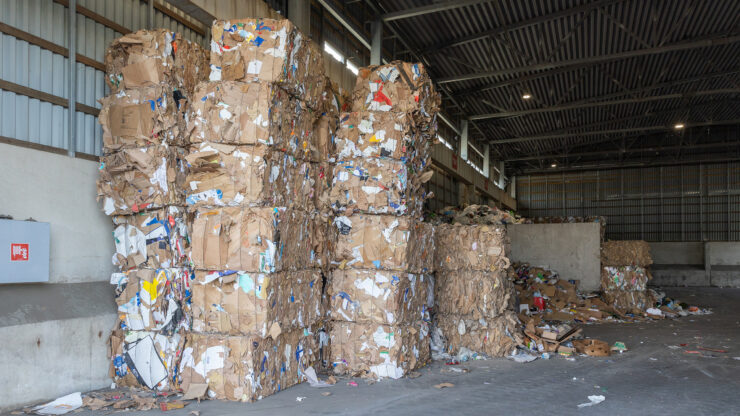
Collaboration to find solutions for waste management in Arctic municipalities
Nadezhda Filimonova’s desire to use her research to bring tangible benefits to the residents of the Arctic led…