
Rupert Gladstone hopes that our generation have will to make right decisions in order to secure favorable living environment also for the future generations.
It is not too late yet. It is still possible to
influence the direction in which the global climate is developing. With modern
research methods, the climate and the changes taking place can be studied so
precisely that under certain conditions we will be able to predict the trends and
even steer them in the desired direction. This is at least the opinion of Rupert
Gladstone, Adjunct Professor at the Arctic Centre, who specialises in the study of
Antarctic ice sheet.
– Social media is feeding us a great deal
of false information about climate change, and bad information easily offsets
professional expertise. It is true that, with human activity contributing, climate
change has reached a critical point and we are faced with many difficult choices.
However, our generation still has the opportunity to make the right decisions and
safeguard a favourable living environment even for the future generations.
According to Gladstone, the understanding of the link between climate
change and melting glaciers is getting stronger, as the changes are increasingly
visible. There is no point denying the facts: sea waters are warming and the sea
level is rising with the melting glaciers contributing. Gladstone tells about
speculations that the melting of Antarctica could be much faster than previously
believed. We are talking about melting up to a meter in 100 years.
– I personally consider the issue of climate change in a very academic way,
and it does not affect me on an emotional level. I am more concerned about personal
issues, if my children are bullied at school, say. And of course I am worried about
global political disasters, such as Trump being elected president, Gladstone
laughs.
Photo:
Ari Laakso/Arctic Centre
Englishman
Gladstone and his German-born wife Angela have two children. The family of four have
relocated often. They have moved around the world because of the father’s work
– from England to Australia, Germany and Finland. Gladstone admits that moving with
the family is not always easy. What makes it easier is that the family makes the
decisions together, and they learn to know the destination in advance. First
invitation to work in Rovaniemi came in 2012.
– We were still
living in England at the time, but we had been thinking about moving for a while.
The Arctic Centre had posted a vacancy in the Global Change Research Group that
needed an experienced person for modelling the Svalbard ice cap. I was hired and we
moved to Lapland.
Currently, the family base is in the village of
Dachsberg in southern Germany in the picturesque Black Forest area. According to
Gladstone, the small village is located so high above sea level that the threat of
rising waters cannot reach them. To those altitudes, Gladstone returns immediately
after a work period in Rovaniemi ends, and from there he will soon launch himself
back to the wide expanses of Lapland.
– For the time being, the
arrangement is such that I research for and cooperate with the Arctic Centre mainly
remotely from home in Germany. At regular intervals, I fly to Rovaniemi for a few
weeks to meet colleagues, to work on my research and to guide graduate students who
are specialising in my field.
From the outset, Gladstone has
found the Arctic Centre and Rovaniemi pleasant and hospitable places where the focus
is on the people and on the employees. According to him, you can see this especially
in small details.
– When I got here to work for the first time,
they asked me what kind of office chair I would like. I got a really cool and
ergonomic chair. I found that exceptional. I realised that here people are really
appreciated.
Rupert
Gladstone
- Adjunct Professor of Computer Modelling in
Glaciology - Global Change Research Group, Arctic Centre
- Research topics include the stability of ice sheets and their
contribution to sea level rise, ice sheet – ocean interactions, and computer
modelling of ice flow. - Motto: “All models are wrong but some
are useful” - Rupert Gladstone’s publications and projects can be
accesses through the LaCRIS research system and in Google Scholar
Welcome to the open lecture on 24
October, 2018: Stopping the flood – Can we engineer ice sheets and
save the homes of a billion people?
Text and photo: Maria Paldanius
More news
All news
Leena Leppänen has been awarded the title of Docent at the Arctic Centre
Leena Leppänen, Doctor of Philosophy, has been awarded the title of Docent at the Arctic Centre of the…
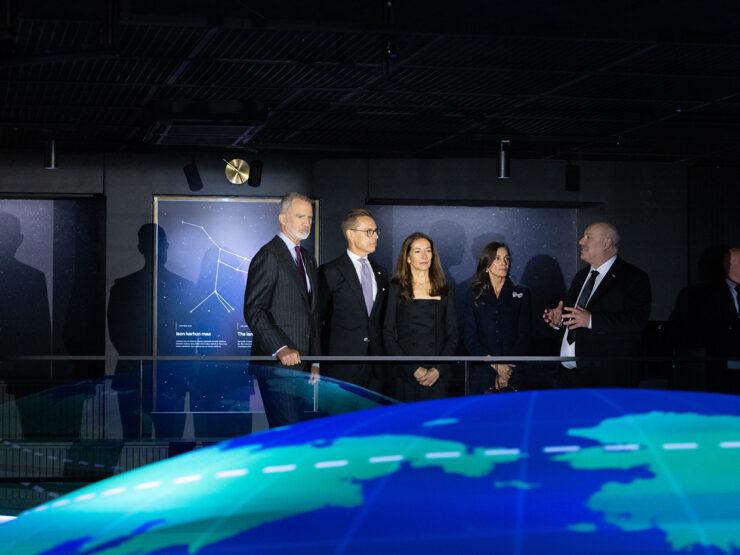
H.M. King of Spain and the President of the Republic of Finland with their spouses visited the University of Lapland and Arktikum
Their Majesties King Felipe VI and Queen Letizia of Spain and the President of the Republic of Finland…
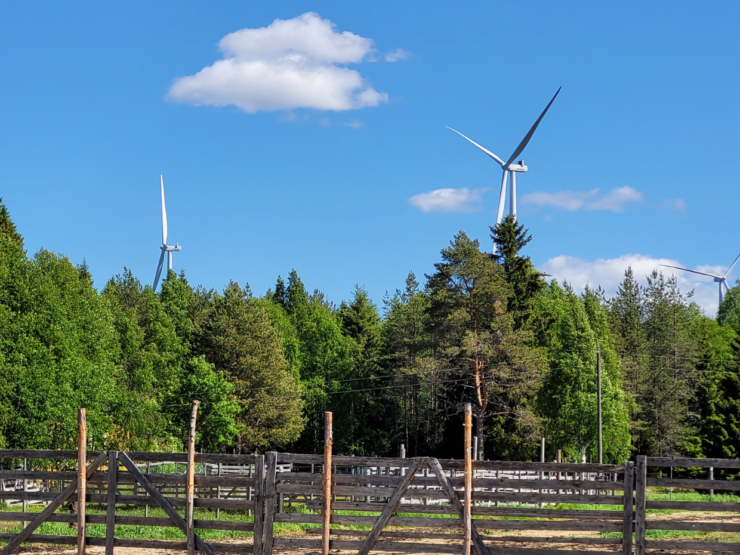
A new publication examines the cumulative impacts of the green transition on traditional Sámi livelihoods
In Nordic cooperation made report "Towards understanding and managing cumulative impacts in Sápmi: approaches & collaboration – Workshop…